Community
How to Start a Local Barbecue Club in Your Town
Most people who get serious about barbecue end up cooking for the same small audience. You spend a week planning a two-zone setup and a pork shoulder, then serve it to four relatives who would honestly have preferred a sausage. A club changes that. It gives you a reason to cook more often, a table of people who will actually eat what you make, and a steady supply of opinions about whether the ribs needed another hour.
Starting one is less work than it sounds. You do not need a committee, a constitution or a logo. You need somewhere to cook, a handful of people who turn up, and a straightforward way to cover the charcoal.
Decide what kind of club you actually want
The clubs that last are the ones with a clear, modest purpose. Groups that try to be a cooking class, a competition team and a social night all at once tend to fizzle by the third meet. Pick one shape and let it evolve later.
- The monthly cook-out. One Saturday a month, everyone brings something, one or two people run the grills. Low effort, high turnout, brilliant for people who just want a crowd to cook for.
- The skills club. A theme each time: low and slow, direct grilling over lumpwood, rotisserie, smoking on a kettle. Members take turns to lead a cook and explain what they are doing.
- The competition crew. A handful of keen cooks who practise together and enter local events. Smaller, more committed, needs a shared kit and a rota for who carries what.
For most towns, the monthly cook-out is the right starting point. It is easy to explain and easy to leave without awkwardness, which matters more than it sounds.
Finding a venue that will say yes
This is the part people overthink. Plenty of places have a patch of hard standing, a tap and a toilet, and would welcome a crowd on a quiet afternoon. Approach them directly rather than by email if you can.
Pubs with beer gardens are often the best first call. A landlord gets thirty thirsty people on a Tuesday evening in exchange for the use of a corner of the car park. Rugby and cricket clubs usually have a field, a bar, bins and a need for income between seasons. Village halls, community centres, allotment associations and farm shops are worth asking too. So is a member's own garden if it has space and a forgiving neighbour.
Parks and council-owned land are possible but slower: expect to ask permission well in advance and answer questions about insurance and litter.
What to check before you commit
- Water access, toilets and where the bins go afterwards.
- Whether you can arrive early to set up and stay late to clear up.
- Wind shelter, and whether the ground is level and safe for a hot kettle.
- Parking, and whether children and dogs are welcome.
- Who holds public liability insurance, and whether your event is covered by it.
Insurance and food-safety rules vary depending on whether you are cooking for your own members or selling food to the public. If money changes hands for food, or you open the gate to anyone, speak to the venue, your council's environmental health team and an insurance broker before the first cook. It is a short conversation that saves a long headache.
Inviting members without becoming a nuisance
A noticeboard post will get you a couple of replies. Five personal invitations will get you five people. Start with people you already know who like cooking or eating outdoors, then ask each of them to bring one person. A club of eight to twelve is ideal for the first few months; a crowd of thirty needs a different venue, more kit and a queuing system.
Make the ask specific. "We are cooking at the rugby club on Saturday the 14th from 2pm. Bring your own meat and something to share, and £5 towards fuel and the room." Vague invitations get vague answers.
Set up a WhatsApp group or a simple email list, and accept that one person has to be the one who confirms the date every month. Rotate that job eventually, but somebody must do it at the start.
Running your first meet-up
Keep the first one deliberately dull. Familiar food, one or two cookers, no ambitious timings. Burgers, sausages, chicken thighs and a tray of vegetables will tell you far more about how the group works than a brisket ever will. Save the long cook for meet three, when you know who arrives on time and who owns a probe thermometer.
Give people a window rather than a start time — "arrive from 2pm, eating around 4" — because someone will always be late, and nobody enjoys standing around a cold grill.
A workable first-meet timetable
- Set up tables, bins and hand-washing before the fire is lit.
- Light charcoal about ninety minutes before you want to eat.
- Cook in rounds so food comes off hot rather than piling up under foil.
- Keep raw and cooked food on separate boards and use separate tongs.
- Clear down together at the end; it takes ten minutes with four pairs of hands.
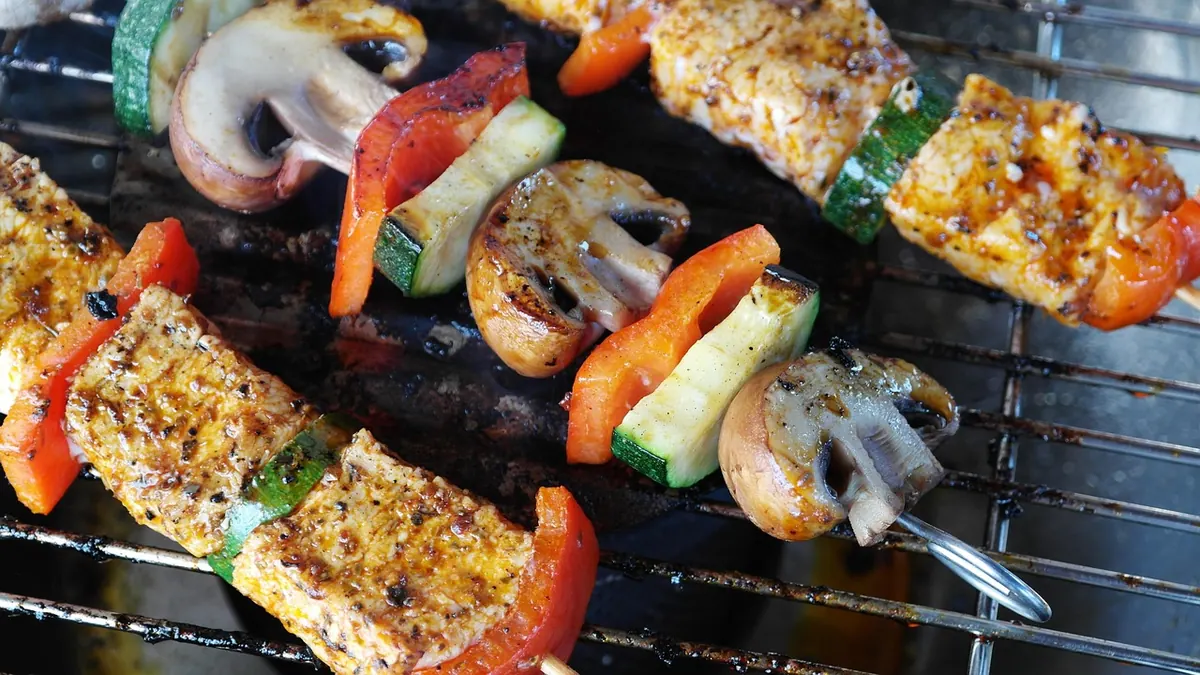
Have something easy for vegetarians and anyone who does not eat meat: halloumi, vegetable skewers, corn, flatbreads. It costs you nothing and doubles the number of people who will come back.
Sharing the costs fairly
Money is where most clubs quietly fall apart. One person buys all the charcoal, foil trays and ice for six months, then stops answering messages. Avoid that from the start.
The simplest model is bring your own meat plus a small contribution per head. That contribution covers fuel, rubs, disposables, ice and anything the venue charges. Agree the figure out loud at the first meet so nobody has to guess later.
If the host cooks for everyone, agree the cost per head in advance and take payment before or on the day by bank transfer. Keep a note of what comes in and what goes out, even if it is just in a phone note. Big purchases — a gazebo, a second grill, a folding table — should be either bought by whoever wants one or funded by a one-off whip round with the amount agreed first.
Keep club money separate from your own. If the sums grow beyond a few hundred pounds, appoint a treasurer and keep a simple record of the balance. And if you ever start selling food to people outside the club, get proper advice on the rules that apply.
Keeping it going past month three
Novelty fades. A fixed date helps enormously: the second Saturday of the month, every month, whatever the weather. Build a weather plan into the club's identity — a gazebo, a tarpaulin, waterproofs and a standing joke about rain. Rain does not cancel the cook; it just moves it under cover.
Rotate the hosting so no one person carries the load. Share a basic kit that lives in one member's garage. Have a winter plan: chillies, stews and casseroles in a Dutch oven, or a covered corner of the pub garden. And accept that some months will be four people around a small grill. Those are often the best ones.
Start with one date
Choose a Saturday three weeks from now. Ring the venue and ask. Message six people. Buy a bag of charcoal and a pack of sausages. Everything else — the rota, the newsletter, the matching aprons — can wait until you have cooked together once.
The first meet does not have to be impressive. It has to happen, and it has to be easy enough that people say yes to the second one.
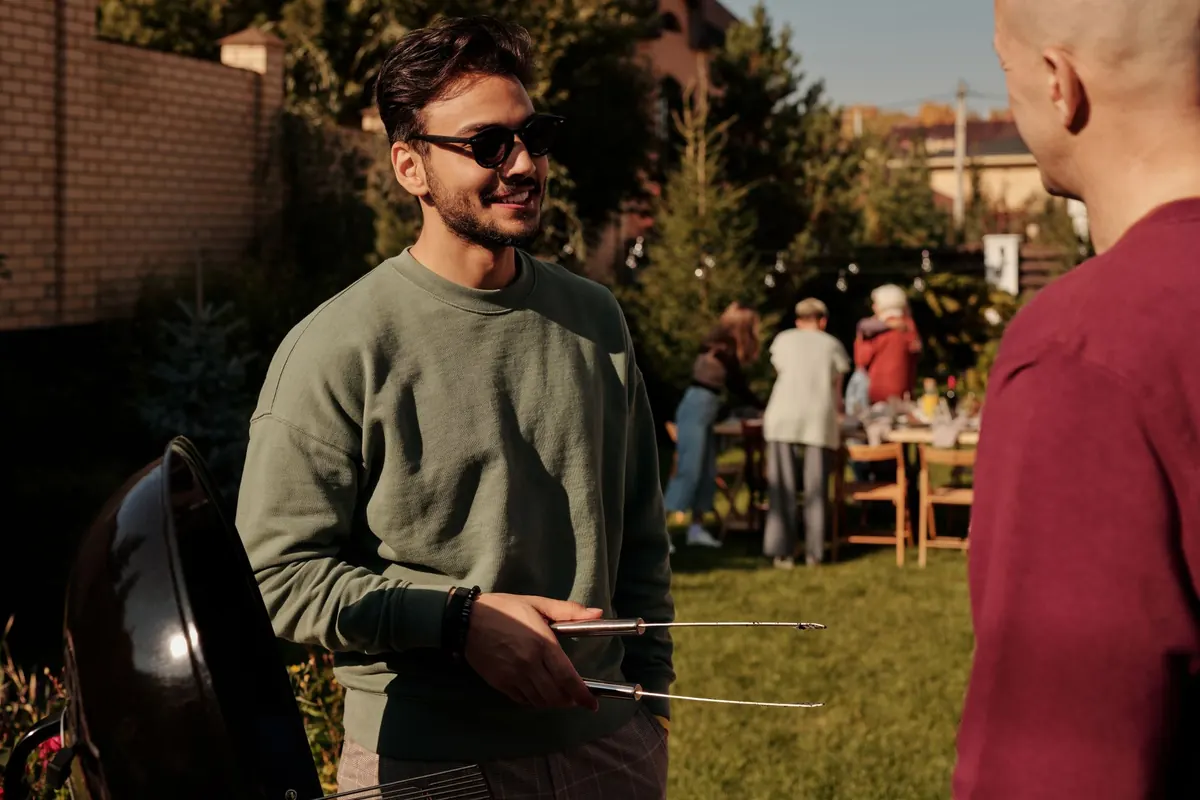
Photo: Askar Abayev / Pexels