Smoking
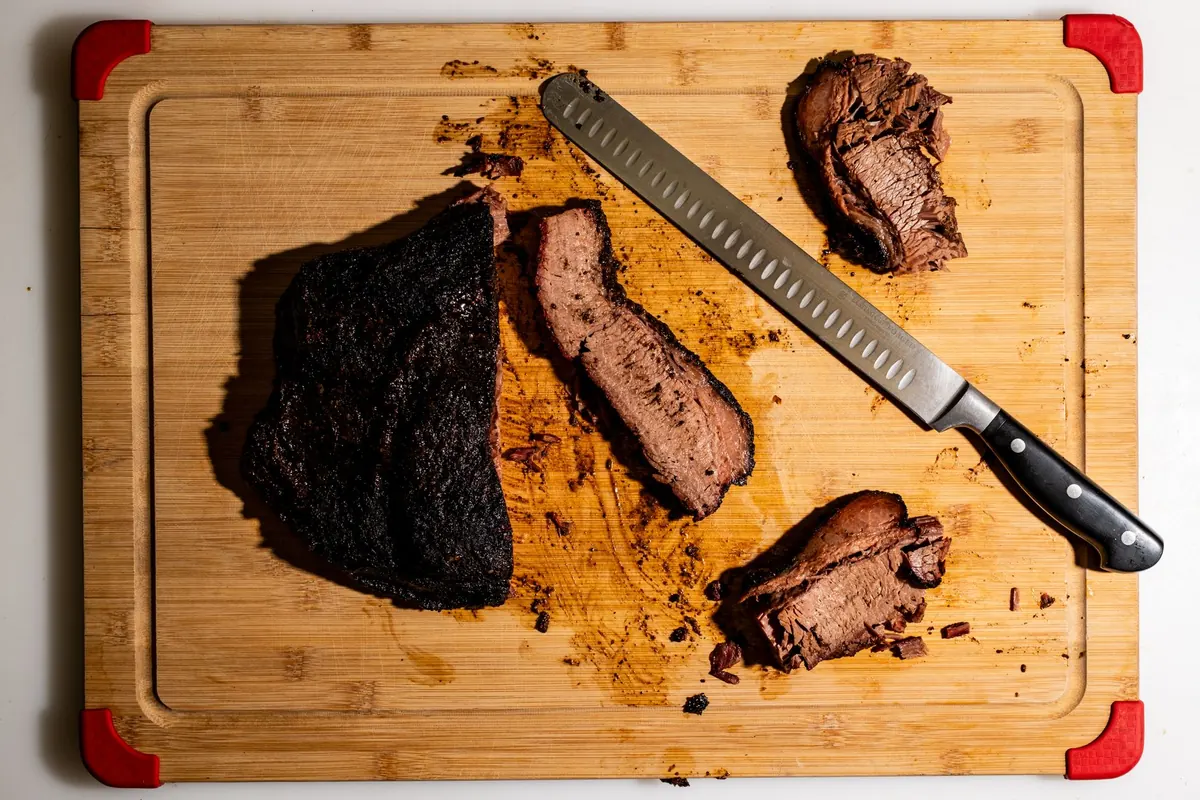
The Stall Explained: Why Your Brisket Stops Rising and What To Do
Somewhere between hour six and hour nine, the brisket stops. The probe has been creeping up a degree at a time, then it simply sits there — 68°C, 69°C, 68°C again — while the fire burns cheerfully and the clock keeps running. Nothing is wrong with your cook. You have met the stall, and once you understand what causes it you can decide calmly whether to push through it, wrap your way around it, or put the kettle on and let it take its course.
What's actually happening in there
Cook a big cut slowly and its surface stays damp for hours. That dampness is the whole story.
Heat from the fire reaches the meat, water at the surface turns to vapour and drifts off, and the energy that took is carried away with it. The joint is sweating, and in a hot, moving chamber it sweats a great deal.
As long as evaporation is removing roughly as much heat as your fire is delivering, the internal temperature barely moves. That plateau normally turns up somewhere between 65°C and 75°C, which is exactly the range where the meat still holds plenty of moisture and the fire is gentle. Collagen is converting throughout the cook, but it isn't what pins the needle in place. The cooling effect of evaporating water is.
The stall ends when the surface dries out enough to form a set bark. Evaporation slows, the heat going in starts winning, and the probe climbs again. On a brisket that can be two, three, even four hours of near-nothing. It is completely normal. It is also deeply irritating when you have guests arriving at six.
Why some cooks stall harder than others
Two people cook a similar-sized brisket at the same temperature and one sails through in ninety minutes while the other sits at 70°C until the coals give up. The reasons are environmental rather than mystical.
A wet surface stalls longest. Spritzing or mopping every half hour keeps replacing the water that evaporation is trying to remove, and cold liquid from a spray bottle makes it worse. A water pan raises the humidity in the chamber; whether that helps or hurts depends on your cooker and its airflow, so treat the pan as a flavour and temperature tool rather than a stall cure.
Wind and cold weather strip heat from the outside of the cooker and slow everything down. A crowded chamber holding two or three big cuts keeps more moisture in the air. And if the temperature has barely moved from the very start, suspect your probe rather than the meat: a tip resting in a fat seam or a gap between muscles will give you a nonsense reading.
Your options, and what each one costs you
- Wait it out. Do nothing. Best bark, best texture, worst schedule. You need a steady fire and a relaxed afternoon, and you should be ready for the stall to last longer than you'd like.
- The foil crutch. A tight wrap in heavy foil, often with a splash of liquid. Fastest route through — expect the internal temperature to move within half an hour. The trade-off is a softer bark and a texture some people find closer to pot roast. Wrap only once the bark is the colour you want, because it won't darken much inside the foil.
- Butcher's paper. Peach-coloured paper lets some moisture escape, so the crust stays firmer and the stall is shortened rather than skipped. Slower than foil, much kinder to the bark.
- The foil boat. Crimp a sheet of foil into a shallow boat around the brisket and leave the top exposed. It shields the underside from direct heat, keeps the top drying and taking smoke, and collects the juices. A good compromise for overnight cooks.
- Raise the pit temperature. Nudge the cooker from 110°C to 135°C, or even 150°C, and the stall passes far more quickly. Watch the flat and the edges, which dry out first.
Wrapping, step by step
- Wrap when the bark is set and the colour pleases you — typically 70°C to 75°C internal.
- Lay out two overlapping sheets of heavy-duty foil, or an arm's length of butcher's paper.
- For foil, add a tablespoon or two of liquid — water, cider vinegar, a splash of stock. Any more and you are steaming rather than wrapping. Leave paper dry.
- Wrap snugly with the seams sealed and as little trapped air as you can manage.
- Return it to the cooker at the same pit temperature and carry on until it probes tender. That usually means somewhere between 95°C and 100°C, but feel matters more than the number: the probe should meet almost no resistance.
- Rest it before slicing — half an hour at the bare minimum, and an hour or two is better.
Keeping the cook on schedule
Work backwards from serving time. A rough planning figure many cooks use is around 90 minutes per kilogram at 110°C, plus a two-hour buffer on top. That makes a 5kg brisket an all-day or overnight job, and if lunch is the target, you should be lighting the fire the night before.
The most useful scheduling tool in barbecue isn't a wrap, it's a long hold. Once the brisket probes tender, wrap it, wrap it again in a couple of towels, and drop it into a cool box. It will stay hot for hours, and the rest improves the texture. Keep an eye on the temperature during a long hold: hot food should stay above 63°C. If
Photo: Alex Gonzo / Pexels