Recipes
Low and Slow Pulled Pork: A 12-Hour Smoker Recipe with UK Cuts
Pulled pork is the forgiving end of barbecue. Get a British pork shoulder, a few kilos of charcoal, a handful of spices and the best part of twelve hours, and you will end up with something far better than most of what passes for barbecue in this country. The cut is cheap, the method is slow, and the margin for error is wide. Here is the whole overnight cook: what to ask your butcher for, how to rub it, when to wrap, how long to rest it, and the cider vinegar sauce that cuts through all that richness.
Pick the right British pork shoulder
You want shoulder. Not leg, not loin, not tenderloin, however tempting the price. Shoulder does the work a pig spends its life doing, which is why it is threaded with collagen and fat that only makes sense after a long, low cook.
Bone-in shoulder is the ideal. In Britain it turns up as a blade of pork or simply “shoulder on the bone”, usually between 3kg and 5kg. That is enough for eight to twelve people once pulled. The bone is worth keeping: it slows the heat through the middle of the joint and gives you a reliable spot to test for doneness later.
Boneless rolled shoulder works perfectly well, and it is what most supermarkets stock. Tie it tightly if your butcher has not, and expect it to cook a little faster. Picnic shoulder, from lower down the foreleg, is leaner and heavier on skin; it makes good pulled pork but needs more attention so it does not dry out. Hand of pork is the same area in a smaller, cheaper format.
Then there is the rind. Almost every British shoulder comes with it on, and you have a decision to make. Leaving it gives you a self-basting lid, but the rub never touches the meat and you get no bark. Trimming it off and leaving roughly a centimetre of fat underneath gives you a proper dark crust. Keep the rind, score it, salt it, and roast it hard while the pork rests — crackling on the side of a pulled pork bun is not a bad thing at all.
Salt first, rub later
Salt early, flavour late. The night before the cook, sit the shoulder on a rack over a tray and salt it generously all over — roughly 10g of coarse salt per kilo of meat. Leave it uncovered in the fridge for twelve to twenty-four hours. The surface dries, the salt works its way in, and you get meat that tastes seasoned rather than coated.
Then build a rub. This is enough for a 4kg shoulder:
- 3 tbsp light brown sugar
- 2 tbsp sweet paprika
- 1 tbsp coarse black pepper
- 1 tbsp mustard powder
- 2 tsp garlic granules
- 2 tsp onion granules
- 1 tsp cayenne pepper
- 1 tsp ground cumin
No extra salt in the mix, since the meat has already had its share. Smear the shoulder thinly with yellow mustard — it disappears completely and gives the rub something to grip — then dust the rub on from a height and press it in. Do this while the smoker comes up to temperature, not hours before, or the sugar will draw moisture and turn to syrup.
Setting up for an overnight cook
Aim for 107–110°C (225–230°F) at grate level. Fill your charcoal basket with unlit briquettes or lump, bury three or four fist-sized chunks of apple, cherry or oak among them, then tip a full chimney of lit coals on top. The fire burns downwards through the basket and holds a steady temperature for hours without interference — which is the entire point when you plan to sleep.
Put a water pan in, filled with hot water. It buffers the temperature and keeps the early cook humid, which helps smoke stick. Set two probes: one in the thickest part of the shoulder, away from the bone, and one clipped at grate level. A wireless thermometer with a low-temperature alarm is the difference between a night's sleep and sitting in a deckchair at 3am. If your cooker swings ten degrees either way, leave it alone. Chasing numbers is how overnight cooks go wrong.
Twelve hours, stage by stage
The first four hours do most of the work that matters. The rub sets into a dark mahogany bark, and the internal temperature climbs steadily towards 65–70°C.
Then it stops. This is the stall, and it is not a fault. As moisture evaporates from the surface it cools the meat as fast as the fire heats it, and the temperature can sit still for two to four hours. Meanwhile, fat renders and collagen turns to gelatin. This is where pulled pork actually happens.
Wrap when the bark is set and the colour is deep — usually somewhere between 72°C and 75°C, around hour seven to nine. Aluminium foil is faster and keeps everything juicy; butcher paper holds the bark firmer but takes longer. Lay the shoulder on two sheets, add three or four tablespoons of cider vinegar or apple juice, wrap tightly, and return it to the cooker. Once wrapped, smoke cannot reach the meat, so the oven at 110°C is a perfectly sensible place to finish, and it is easier to manage.
Resting and pulling
Cook until it is done, not until the clock says so. That means 95–96°C internal, and a probe that slides into the thickest part with almost no resistance, like pushing a knife into warm butter. If it fights back, give it another thirty minutes and check again.
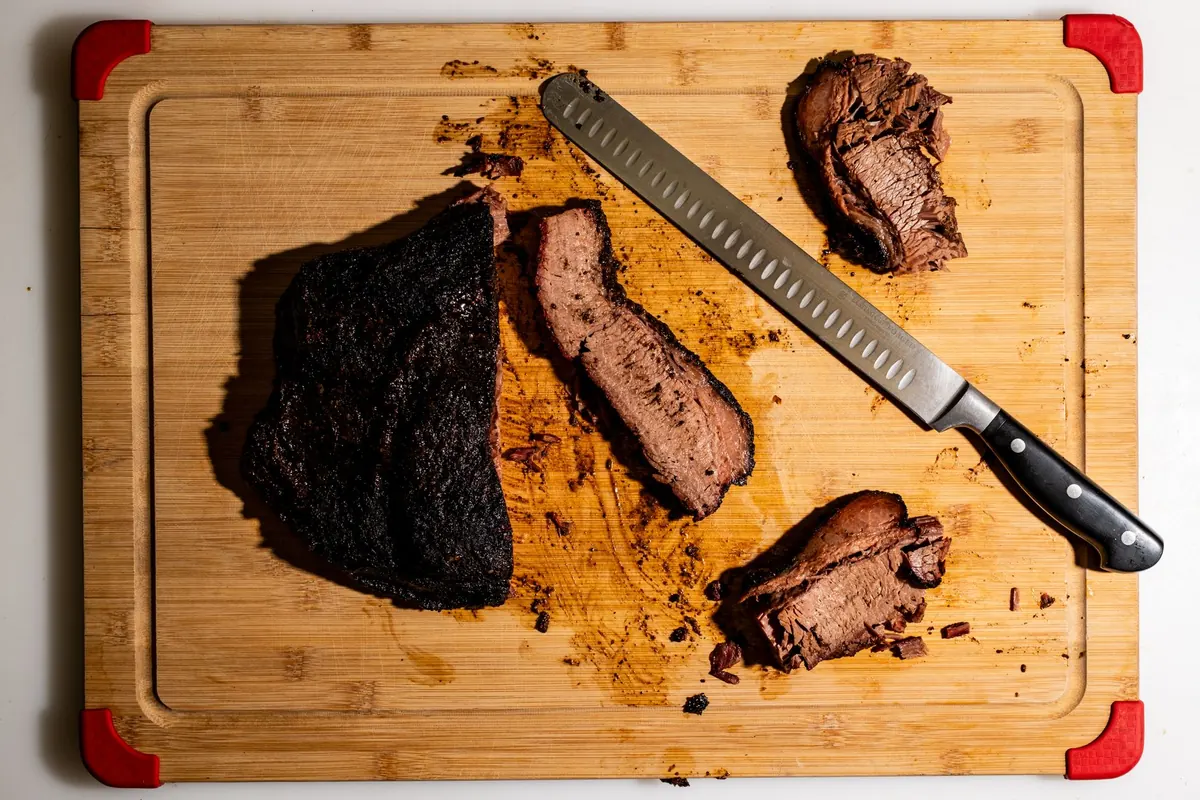
Rest it wrapped in a cool box under a couple of old towels for at least forty-five minutes, ideally two hours. It will stay hot for far longer than you would expect, and this is when the juices redistribute. Pull it with two forks or, once it is cool enough, your hands. Throw away the big wobbly seams of fat, keep every scrap of bark, and shred it loosely rather than into a paste.
The cider vinegar finishing sauce
This is not a thick, sweet barbecue sauce. It is a sharp dressing, and it is what stops a plate of pork from tasting heavy. Warm 250ml cider vinegar with two tablespoons of light brown sugar, a teaspoon each of salt, chilli flakes and mustard powder, a crushed garlic clove and a splash of Worcestershire sauce. Stir until the sugar dissolves, take it off the heat and let it cool. Pour a few tablespoons over the pulled pork while it is still hot, toss, taste, and add more. Keep the rest in a jug on the table. It keeps in the fridge for a couple of weeks.
Timings, serving and leftovers
Work backwards. A 4kg bone-in shoulder wants twelve to fourteen hours on the smoker plus two hours resting. Start at 10pm, wrap around five or six in the morning, and you will be pulling pork by early afternoon. Every shoulder is different, so treat those numbers as a plan, not a promise, and always cook to temperature and feel.
Serve it in soft white rolls with a sharp slaw — cabbage, apple and fennel with plenty of vinegar — plus pickles and extra sauce. Leftovers keep three days in the fridge; reheat gently, covered, with a splash of sauce or apple juice so it does not dry out, and freeze in portions with a little sauce for another day. Cool anything you are storing quickly, and reheat until piping hot throughout.